
Product
Why Twiniti Started Using SpecStory

5 min read
AI-assisted development has changed the way we build software at Twiniti.
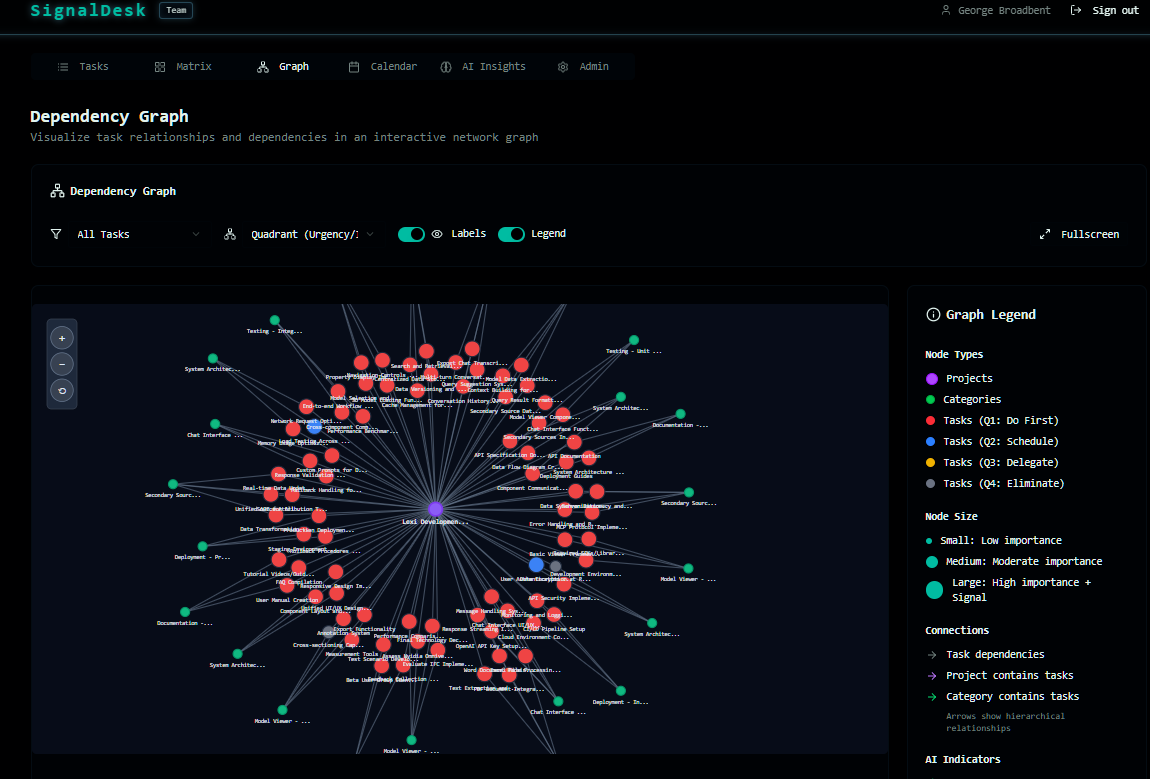
Cursor has become a core part of how we design, prototype, refactor, debug, and move ideas into working applications. It allows us to work quickly across Twiniti's growing product ecosystem that includes Praxis, Lexi, Praxis Scout, Praxis Sentinel, Praxis Mentor, Praxis Codex, Asset Logic, SignalDesk, and the internal systems that support our work.
As our use of AI grew, we started to notice something we had not fully anticipated. The code was evolving rapidly, but the conversations behind that code were disappearing just as fast.
At first, that did not seem like a major issue. If the feature worked, the bug was fixed, or the refactor was complete, it was easy to assume that the conversation had served its purpose. But over time, we realized that the interaction with the AI was not just a temporary step in the process. It held the prompts, assumptions, reasoning, tradeoffs, failed attempts, debugging steps, and decisions that shaped the final result.
In many cases, the most important context behind a change was not in the code. It was in the conversation that led to the code.
In traditional development, that kind of context is usually captured across tickets, commit messages, pull requests, architecture notes, documentation, or conversations between developers. With AI-assisted development, much of the real work happens inside the exchange with the AI. Requirements are clarified there. Options are tested there. Mistakes are corrected there. Decisions are made there.
When that history is not preserved in a useful way, the reasoning behind the work starts to disappear.
That became a real issue for us.
We did not just want to know what changed in the code. We wanted to understand why it changed, what the AI had been asked to do, where it went off track, what we accepted, what we rejected, and where the process either accelerated us or slowed us down.
Cursor is excellent for active development, but once a session moves on, reconstructing the full context becomes difficult. That made it harder for us to review decisions, onboard team members, track recurring issues, and understand how our AI-assisted workflow was performing over time.
So we started looking for a better way to preserve that layer of work.
That is when we found SpecStory.
What stood out immediately was that SpecStory treated AI development conversations as part of the project record rather than disposable chat history. The conversation became something we could store, revisit, search, and learn from. It was no longer just a record of what we asked the AI to do. It became a record of how the work actually came together.
That changed the way we thought about our build process.
For a company like Twiniti, this matters because we are not building a single isolated application. We are building an ecosystem. Praxis focuses on data governance for facility operations. Praxis Scout supports field data collection. Praxis Sentinel supports inspections. Praxis Codex helps organize regulatory intelligence. Praxis Mentor provides AI-assisted operational guidance. Asset Logic is the semantic layer for our data and Lexi is our AI platform that blends the data together in a Digital Twin interface.
Each application has its own purpose, architecture, data model, and development history, but they are also connected. A decision made in one area can affect another. A pattern that appears in one build process may show up somewhere else. A misunderstanding in one AI session can reveal a gap in our documentation, naming, data model, or product architecture.
That is why preserving the conversation became so important.
SpecStory gave us a way to see the path from the original instruction to the final implementation. A commit can show that a component changed, but the SpecStory history can show why it changed, what alternatives were considered, what issues came up, and how we arrived at the final direction.
Over time, we started using SpecStory for more than simply looking back. It became part of how we operate. Each week, our agents review the SpecStory history and generate a summary of the development activity across our applications. Those summaries help us identify changes, recurring issues, unresolved decisions, and areas that need more attention.
That created a feedback loop we did not have before. We are not only building with AI. We are learning from how we build with AI.
That distinction matters. AI can make development faster, but speed without memory creates risk. If we cannot trace the work, it is harder to govern it. If we cannot understand the decisions, it is harder to improve the process. If we cannot see where the AI struggled, it is harder to refine how we use it.
SpecStory has helped us turn AI-assisted development activity into something we can actually work with. It gives us visibility into the reasoning behind the work, helps us review what was requested and accepted, and allows us to see patterns across sessions, applications, and development efforts.
Looking back, the biggest lesson is that the real asset is not only the code that gets produced. It is the intent behind the code, the decisions that shaped it, and the context that explains it.
For Twiniti, SpecStory has become part of the operating layer for our AI-assisted build process.